




Quick answer: Creatine monohydrate powder and creatine gummies can both deliver the same compound. Powder is usually cheaper per gram, but creatine is only moderately soluble in water (about 14 g per litre at 20 °C), so undissolved particles can settle as sediment if you do not swirl and finish the drink. Gummies give a fixed, pre-portioned daily serving with no mixing. Independent tests have found that some gummies on the market contain less creatine than labelled, so choose a brand that states creatine per daily serving clearly. LUVA Creatine Gummies provide 5 g of creatine monohydrate in two gummies.
Same molecule, different format. For UAE residents who train in the heat, commute long days or simply dislike mixing a chalky drink, the format question is practical: will you take your full dose every day? Here is an evidence-based comparison of creatine powder versus creatine gummies, including the solubility and sediment point that many people notice at the bottom of the glass.

What both formats share
Creatine monohydrate is the form with the largest evidence base. The International Society of Sports Nutrition (ISSN) position stand and a 2021 review of common questions conclude that creatine monohydrate is effective for high-intensity exercise performance and appears safe in healthy people at typical supplemental amounts.
In the EU, an authorised health claim states that creatine increases physical performance in successive bursts of short-term, high-intensity exercise, with a daily intake of 3 g for adults who perform such exercise. A separate authorised claim applies to adults over 55 who combine 3 g of creatine a day with regular resistance training. Supplement wording in the UAE follows local rules, so packs may look different by market.
Neither powder nor gummies change that biology. What changes is how you measure the dose, how you consume it and how easy the habit is to keep.
Creatine powder and water solubility
Creatine monohydrate does not dissolve freely in cool water. Peer-reviewed reviews cite a solubility of about 14 g per litre at 20 °C (and less in colder water). A common 5 g scoop in a small glass of room-temperature water therefore sits near or above that limit. Undissolved particles stay suspended or settle as a sediment at the bottom of the glass.
Researchers describing consumer use note that residue can remain at the bottom, so people need to add more fluid, swirl and drink the remainder to consume all of the creatine. That does not mean "half stays in the glass" as a fixed rule: the unconsumed fraction depends on how much water you used, the temperature, how well you mixed and whether you rinsed the glass. If you leave the grit behind, that leftover powder is creatine you did not ingest.
Practical takeaways for powder users:
- Use enough liquid (often a full shaker rather than a tiny glass).
- Swirl or shake again before the last sip.
- Warmer liquid or a slightly acidic drink (such as juice) can improve solubility, but follow the product instructions and your own stomach comfort.
- Bioavailability of creatine monohydrate is reported as nearly complete once it is ingested; the issue is finishing what you mixed, not a mysterious "locked" form of powder.

How creatine gummies work
Gummies incorporate creatine into a chewable matrix. You do not dissolve them in water, so there is no sediment problem in a glass. The daily serving is counted in pieces rather than scoops.
What matters for effectiveness is the labelled creatine per daily serving and whether the product actually contains that amount. Manufacturing gummies with a full research-style dose is technically harder than blending powder, and water is used in gummy production. Independent testing programmes in 2024 and 2025 reported that a substantial share of creatine gummies they analysed contained far less creatine than the label claimed. That is a product-quality issue, not proof that the gummy format can never work. Frame it as: choose brands that state the dose clearly and that you trust, rather than assuming every gummy jar matches the research dose.
Head-to-head comparison
| Factor | Powder | Gummies |
|---|---|---|
| Convenience | Needs water, scoop or shaker | No mixing; easy in a bag or desk drawer |
| Dosing accuracy (in use) | Accurate if you measure and finish the drink | Accurate if each serving matches the label |
| Sediment / grit | Possible if mixed in limited cool water | None in a glass (no drink to leave behind) |
| Taste / texture | Neutral or flavoured drink; can feel chalky | Designed to taste like a soft sweet |
| Cost per gram of creatine | Usually lower | Usually higher |
| Other ingredients | Often creatine only | Gelling agents, flavours, sweeteners; some add vitamins |
| Travel | Tub and scoop, or sachets | Jar of pieces; no shaker |
| What to check on the label | Grams of creatine monohydrate per scoop | Creatine per gummy and per daily serving |

Who might prefer powder
- You already like mixing supplements and will rinse the shaker.
- You want the lowest cost per gram.
- You prefer a creatine-only product with minimal extras.
- You train at home with a kitchen scale and plenty of water.
Who might prefer gummies
- You skip doses because mixing feels like a chore.
- You commute, travel or work in offices where a shaker is awkward.
- You want a fixed daily count (for example two pieces) without weighing powder.
- You are building a habit and taste matters for consistency.
Consistency is the real performance lever. Muscle creatine stores rise with repeated daily intake over days to weeks. A format you take every day, including rest days, beats a "perfect" powder sitting in a cupboard.
About dosing: 3 to 5 g a day
Research and guidance commonly use about 3 to 5 g of creatine monohydrate a day. Loading (about 20 g a day for 5–7 days) fills stores faster but is optional; a steady 3 g a day reaches a similar muscle creatine increase over about four weeks in classic work by Hultman and colleagues. Take creatine every day, not only on training days.
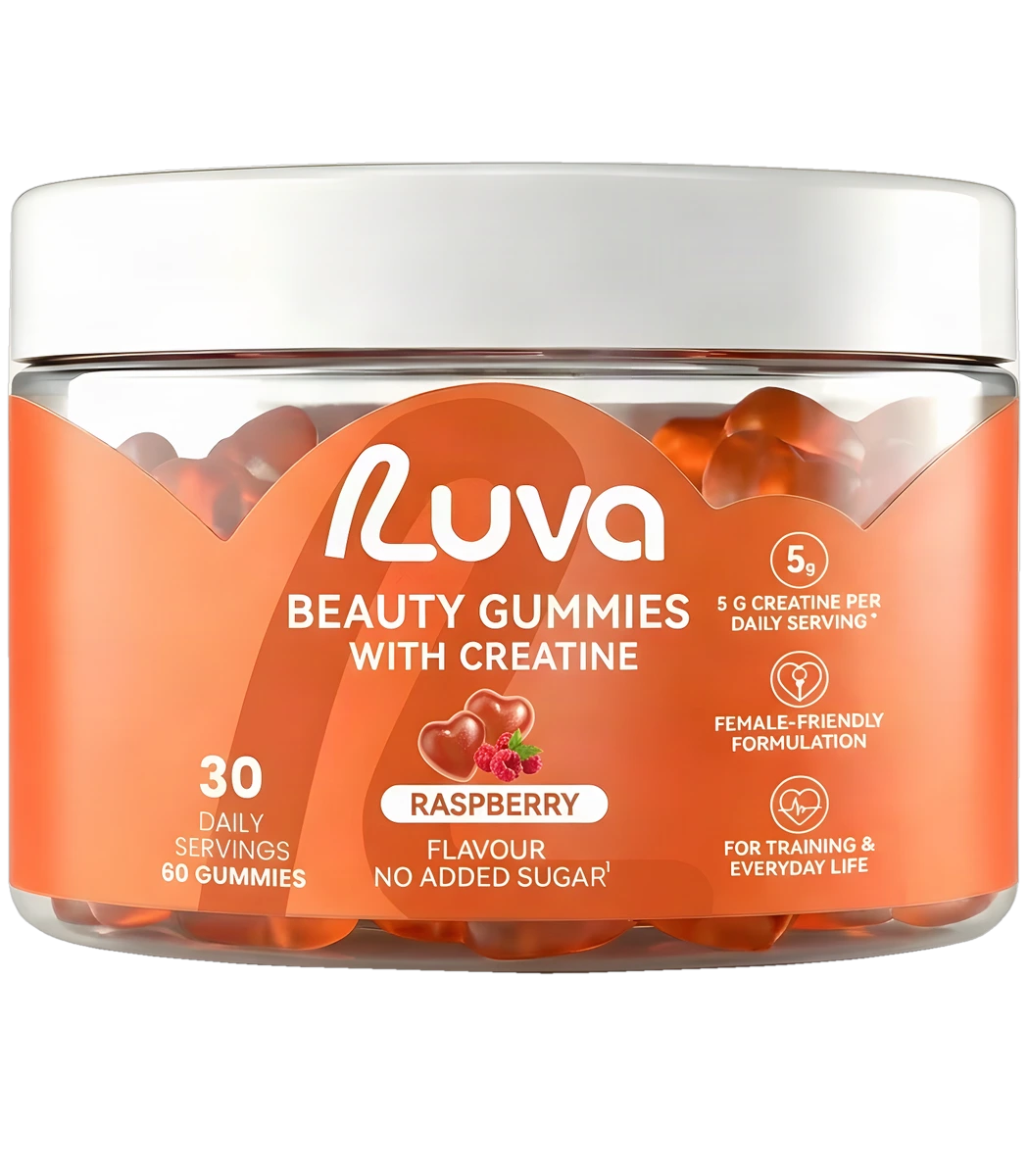
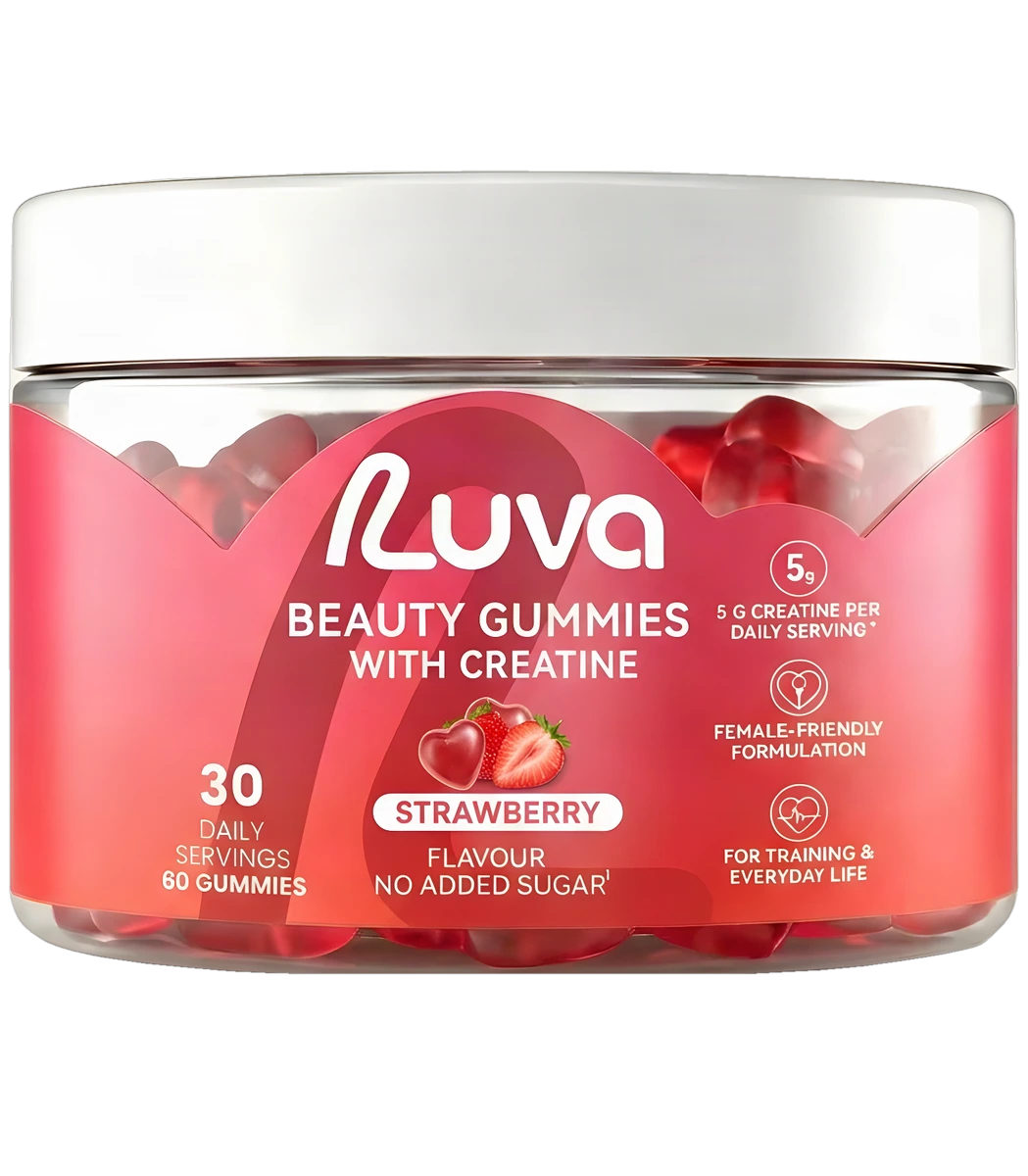
LUVA Creatine Gummies are designed around that daily habit: two gummies provide 5 g of creatine monohydrate, plus keratin, biotin and zinc, with no added sugar. Flavours are raspberry and strawberry. Each tin holds 30 daily servings (60 gummies). They are halal certified. We deliver within 12 hours across the UAE, with free delivery over AED 200.
Food supplement. Not a substitute for a varied, balanced diet and a healthy lifestyle. Do not exceed the recommended daily serving. Keep out of reach of children. If you are pregnant, breastfeeding, under 18, have a medical condition or take medication, consult your doctor before use. Store the jar closed at room temperature, away from direct sun, and never leave it in a hot car.
Choosing quality in either format
- Confirm creatine monohydrate (or clear creatine amount) on the label.
- Check grams per daily serving, not only marketing slogans.
- Prefer transparent brands over vague "proprietary blends".
- For gummies, be aware that some market products have failed independent potency tests; clear dosing and reputable manufacturing matter.
- For powder, micronised products may mix more smoothly but still obey solubility limits in cool water.
The bottom line
Powder and gummies can both supply creatine monohydrate. Powder is cost-efficient if you mix thoroughly and drink the sediment. Limited solubility (about 14 g/L at 20 °C) explains why grit sinks and why unfinished glasses mean unfinished doses. Gummies remove the mixing step and fix the portion, provided the label dose is real. Match the format to the habit you will keep, aim for about 3–5 g a day and ask a doctor first if any medical cautions apply.
Frequently asked questions
Are creatine gummies as effective as powder?
The active compound can be the same. Effectiveness depends on how much creatine you actually ingest each day. With powder, finish the mixed drink including any sediment. With gummies, check that the daily serving matches a research-style amount and that you take it consistently.
Why does creatine powder leave sediment in the glass?
Creatine monohydrate's solubility in water is limited (about 14 g per litre at 20 °C). In a small volume of cool water, undissolved particles settle. Swirl and drink the residue, or use more liquid.
Does leaving powder at the bottom mean I only get half a dose?
Not as a fixed rule. The leftover amount depends on water volume, temperature and whether you rinse the glass. There is no credible source that says "half always stays behind". Finish what you mixed if you use powder.
How much creatine is in LUVA gummies?
Two LUVA Creatine Gummies provide 5 g of creatine monohydrate per daily serving, plus keratin, biotin and zinc.
Do I still need to drink water with creatine gummies?
Yes. Creatine is taken alongside normal daily fluids. In UAE heat, keep overall hydration sensible regardless of format; see our gym hydration guide.
Discover LUVA Creatine Gummies
5 g creatine per daily serving (2 gummies) · Halal · No added sugar · Delivered within 12 hours across the UAE, free over AED 200
Keep reading
- Creatine for women
- Do creatine gummies work
- How much creatine per day
- LUVA creatine gummies
- Hydration for training
Sources
- Kreider R.B., Jäger R., Purpura M. (2022). Bioavailability, Efficacy, Safety, and Regulatory Status of Creatine and Related Compounds: A Critical Review. Nutrients. www.mdpi.com
- Jäger R. et al. (2011). Analysis of the efficacy, safety, and regulatory status of novel forms of creatine. Amino Acids. pmc.ncbi.nlm.nih.gov
- Kreider R.B. et al. (2017). ISSN position stand: safety and efficacy of creatine supplementation. JISSN. pmc.ncbi.nlm.nih.gov
- Antonio J. et al. (2021). Common questions and misconceptions about creatine supplementation. JISSN. link.springer.com
- Hultman E. et al. (1996). Muscle creatine loading in men. J Appl Physiol. pubmed.ncbi.nlm.nih.gov
- Commission Regulation (EU) No 432/2012 and Implementing Regulation (EU) 2017/672 (creatine claims). eur-lex.europa.eu
- NOW Foods creatine gummy testing summary (2024). NutraIngredients. www.nutraingredients.com
- WIRED reporting on independent creatine gummy lab tests (SuppCo). www.wired.com
This article is general information and does not replace advice from a doctor, dietitian or other qualified professional. Last reviewed: October 2026.