




Quick answer: Yes, women can take creatine. Creatine monohydrate is one of the most researched supplements, and studies include women of different ages. Research typically uses around 3 to 5 g a day, taken consistently. Common worries about getting "bulky" are not supported by the evidence; some people notice a small, early increase in body water stored in muscle. Women who are pregnant, breastfeeding, under 18, have a medical condition or take medication should ask their doctor first.
Not sure how much creatine to take? Use our creatine calculator to estimate a daily dose from your body weight and see how many LUVA gummies that is.
Creatine used to be marketed almost entirely at men in gym vests. That has changed. Women's interest in creatine has grown fast, and with it, questions: Will it make me bulky? Do I need to train? Does it cause hair loss? Here's what the research actually says.
What is creatine?
Creatine is a compound your body makes from amino acids, mainly in the liver and kidneys, and also gets from foods such as meat and fish. Most of it is stored in muscle, where it helps supply energy for short, intense efforts like sprints, jumps and heavy lifts.
People who eat little or no meat and fish tend to have lower creatine stores, which is one reason creatine is popular with vegetarians and vegans. Supplement-grade creatine monohydrate is usually produced synthetically rather than from animal sources.
What research shows for women
The International Society of Sports Nutrition (ISSN), in its position stand and a 2021 review of common questions, concludes that creatine monohydrate is effective for high-intensity exercise performance and gains from training, and that short- and long-term use appears safe in healthy people. Researchers have increasingly studied women specifically, including in different life stages, and a 2020 systematic review and meta-analysis focusing on females did not find a higher risk of adverse effects.
In the EU, an authorised health claim states that creatine increases physical performance in successive bursts of short-term, high-intensity exercise, with a daily intake of 3 g, for adults performing such exercise. Supplement claims in the UAE are regulated locally, so the wording you see on packs differs by market.
Myths and facts
Myth: "Creatine makes women bulky"
Creatine does not, by itself, build large muscles. Muscle growth depends on training, nutrition and hormones. What creatine does is help you train a little harder in short, intense efforts.
Myth: "It's just water weight"
Partly true at the start. Creatine draws water into muscle cells, so some people see a small weight increase in the first weeks. This is water stored in muscle, not fat, and not the same as bloating under the skin.
Myth: "Creatine causes hair loss"
This worry goes back to a 2009 study in rugby players that reported increased levels of the hormone DHT. It didn't measure hair loss and the finding hasn't been consistently replicated. A 12-week randomised controlled trial published in 2025, giving 5 g a day of creatine monohydrate to resistance-trained men, found no significant changes in DHT or in hair measures compared with placebo. Research in women specifically is limited. If you're worried about hair loss, a dermatologist is the right person to ask.
Myth: "It's bad for your kidneys"
In healthy people, studies at recommended amounts haven't shown kidney harm, according to the ISSN review. Creatine can raise creatinine, a marker doctors use in blood tests, so tell your doctor you take it. Anyone with kidney disease should not take creatine without medical advice.
Myth: "You have to load it"
Loading, typically about 20 g a day for 5-7 days, fills stores faster, but it isn't necessary. A steady 3-5 g a day reaches the same level over about three to four weeks.

Do I need to work out to take creatine?
Most of the performance research involves exercise, and that's where creatine's effects are clearest. Researchers are also exploring other areas, such as ageing muscle and brain energy, but these are still emerging. If you don't exercise, there's less evidence of a benefit you'd notice.
How much and when?
| Question | What research and guidance suggest |
|---|---|
| Daily amount | Commonly 3-5 g of creatine monohydrate a day |
| Loading | Optional |
| Timing | Consistency matters more than timing; take it at a time that fits your routine |
| Training days only? | Take it every day, including rest days, to keep stores full |
| With food? | Either works; some people find it easier on the stomach with a meal |
Always follow the directions on the pack and don't exceed the stated daily amount.

Gummies or powder?
| Gummies | Powder | |
|---|---|---|
| Convenience | No mixing; easy to carry | Needs water and a scoop or shaker |
| Taste | Designed to taste good | Neutral or flavoured drink |
| Cost per gram of creatine | Usually higher | Lower |
| Other ingredients | Gelling agents, flavours, sweeteners | Often creatine only |
| What to check | Creatine per gummy and per daily serving | Grams per scoop |
Independent tests in recent years have found that some gummies on the market contained less creatine than stated. Choose brands that state clearly how much creatine is in each daily serving.
About LUVA Creatine Gummies
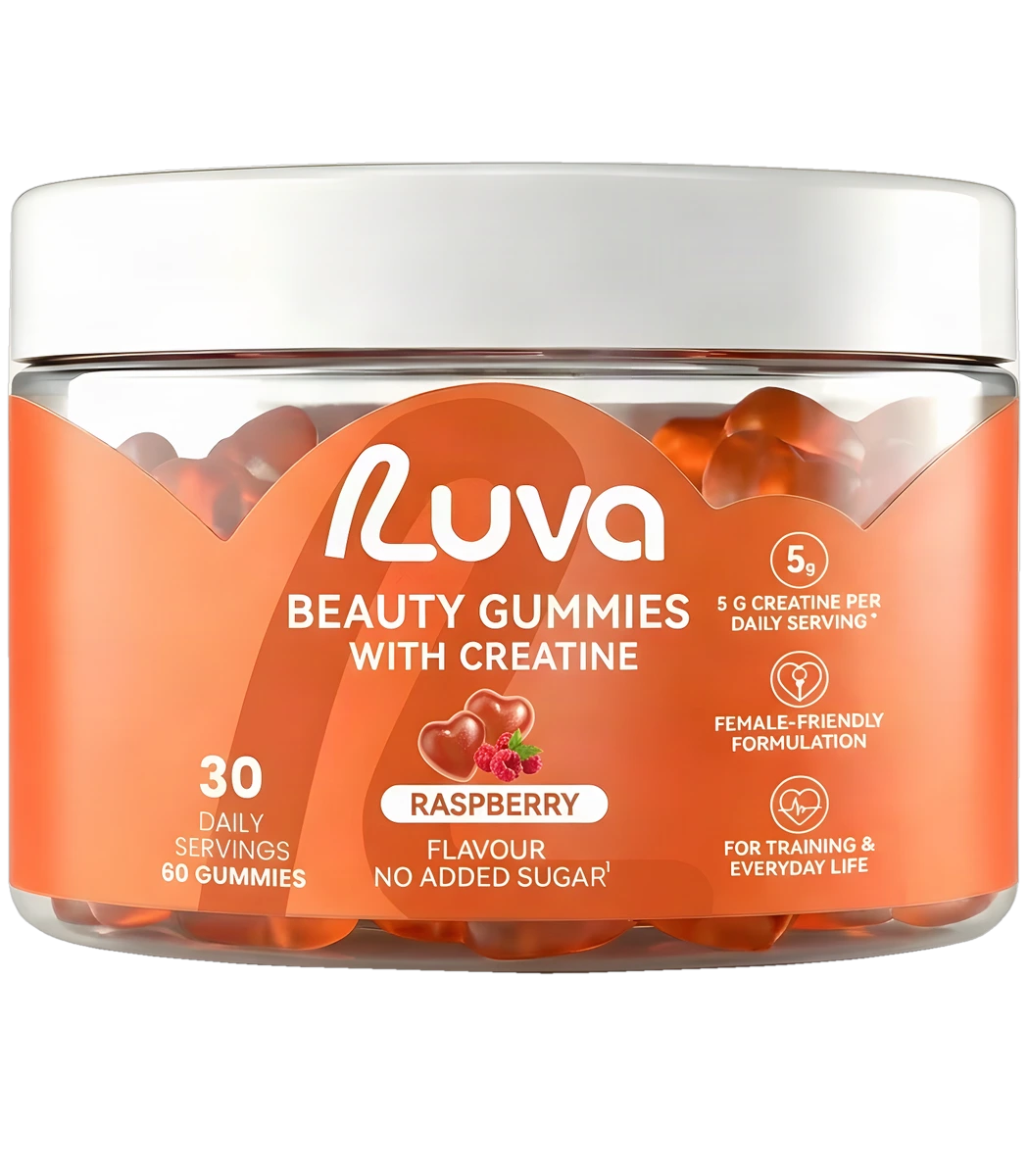
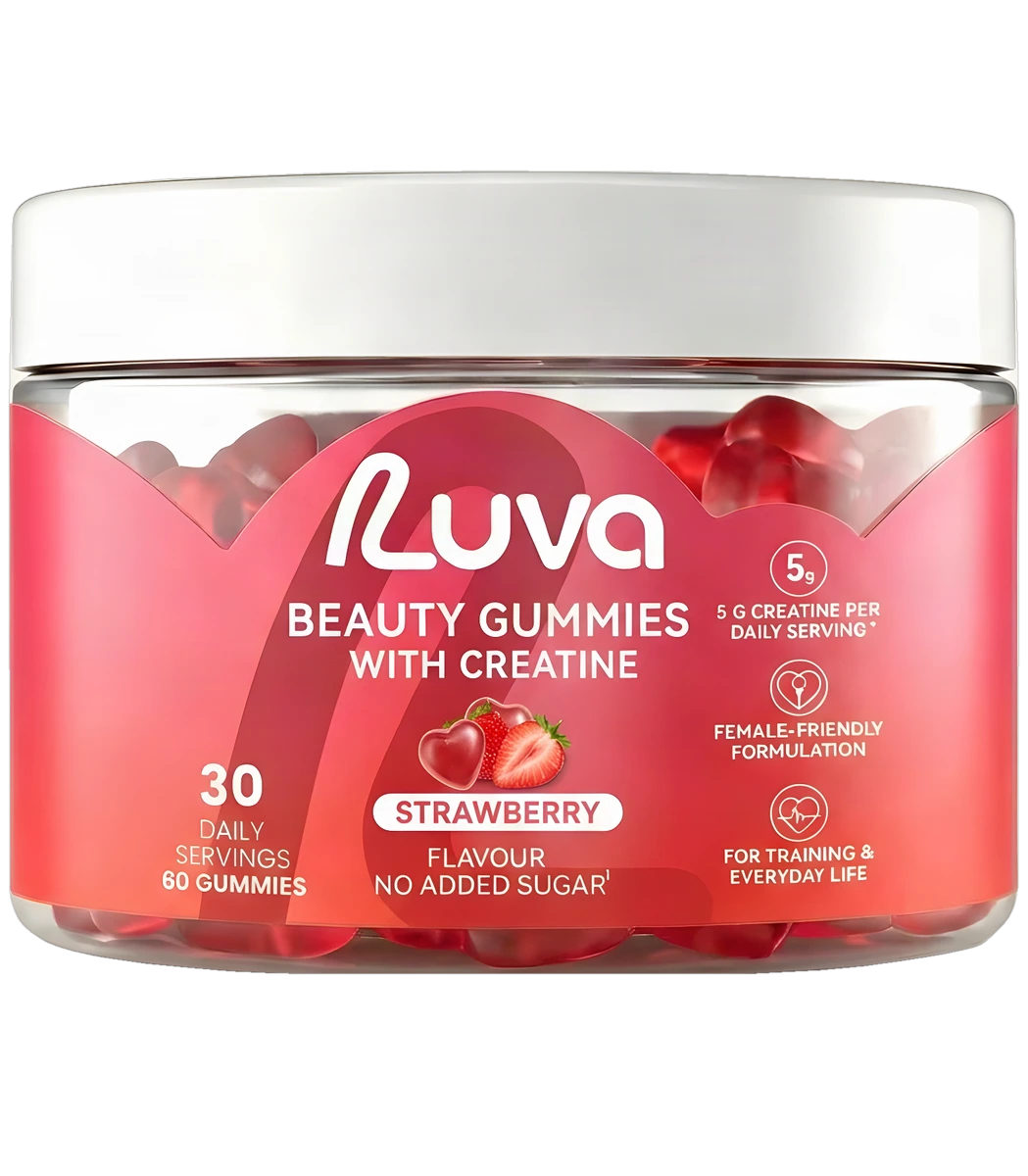
We made our gummies for women who want creatine in a format they'll enjoy every day. Each daily serving of two gummies contains 5 g of creatine monohydrate, plus keratin, biotin and zinc, with no added sugar. They come in raspberry and strawberry, a tin holds 30 daily servings (60 gummies), and we deliver across the UAE. They are halal, and the full ingredient list is shown on the product page and the jar.
Keep the jar closed at room temperature and away from direct sun, and never leave it in a hot car.
Food supplement. Not a substitute for a varied, balanced diet and a healthy lifestyle. Do not exceed the recommended daily serving. Keep out of reach of children. If you are pregnant, breastfeeding, under 18, have a medical condition or take medication, consult your doctor before use.
The bottom line
Creatine is not just for men. It's one of the best-studied supplements, studies include women, and most of the classic fears don't stand up to the evidence. Take a consistent daily amount, choose a transparent product and talk to your doctor first if any of the cautions apply to you.
Frequently asked questions
Can women take creatine every day?
Yes. Research commonly uses 3-5 g of creatine monohydrate a day, taken consistently, including on rest days. Check with your doctor first if you are pregnant, breastfeeding, under 18, have a medical condition or take medication.
Will creatine make me gain weight?
Some people see a small increase in the first weeks because creatine draws water into muscle cells. This is not fat.
Does creatine cause hair loss in women?
There is no good evidence that it does. A 2025 randomised trial in men found no significant change in DHT or hair measures with 5 g a day. Research in women is limited, so ask a dermatologist if you have concerns.
Can I take creatine during pregnancy or breastfeeding?
There isn't enough research to recommend it. Speak to your doctor before taking any supplement during pregnancy or breastfeeding.
Do creatine gummies work as well as powder?
The creatine is the same compound. What matters is that the gummies contain the amount stated on the label and that you take the daily serving consistently.
Discover LUVA Creatine Gummies
5 g creatine per daily serving (2 gummies) · Halal · No added sugar · Delivered within 12 hours across the UAE, free over AED 200
Keep reading
- Creatine powder vs gummies
- Do creatine gummies work?
- How much creatine per day
- Creatine benefits and side effects
- When to take creatine
- Does creatine cause hair loss?
- Creatine for brain focus
- Creatine for women over 40
- Creatine during menopause
- Creatine in the UAE heat
- Hydration for training
- LUVA Creatine Gummies
- ZERUP sugar-free syrup to drink with them
Sources
- Kreider R.B. et al. (2017). International Society of Sports Nutrition position stand: safety and efficacy of creatine supplementation in exercise, sport, and medicine. JISSN. pmc.ncbi.nlm.nih.gov
- Antonio J. et al. (2021). Common questions and misconceptions about creatine supplementation: what does the scientific evidence really show? JISSN. link.springer.com
- de Guingand D.L. et al. (2020). Risk of Adverse Outcomes in Females Taking Oral Creatine Monohydrate: A Systematic Review and Meta-Analysis. Nutrients. www.mdpi.com
- Does creatine cause hair loss? A 12-week randomized controlled trial (2025). PMC. pmc.ncbi.nlm.nih.gov
- Commission Regulation (EU) No 432/2012, list of permitted health claims (creatine). eur-lex.europa.eu
This article is general information and does not replace advice from a doctor, dietitian or other qualified professional. Last reviewed: October 2026.