
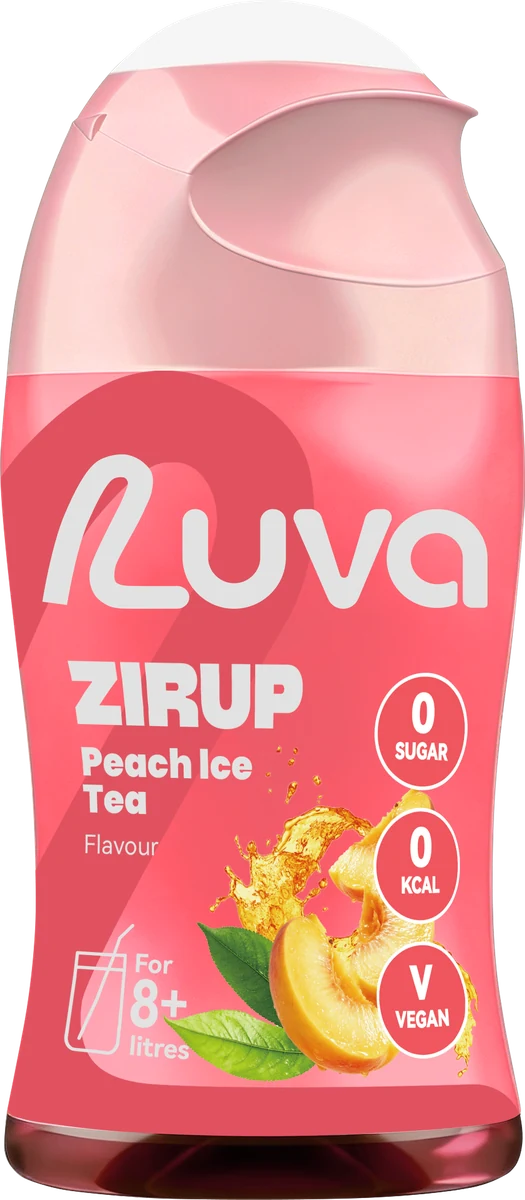
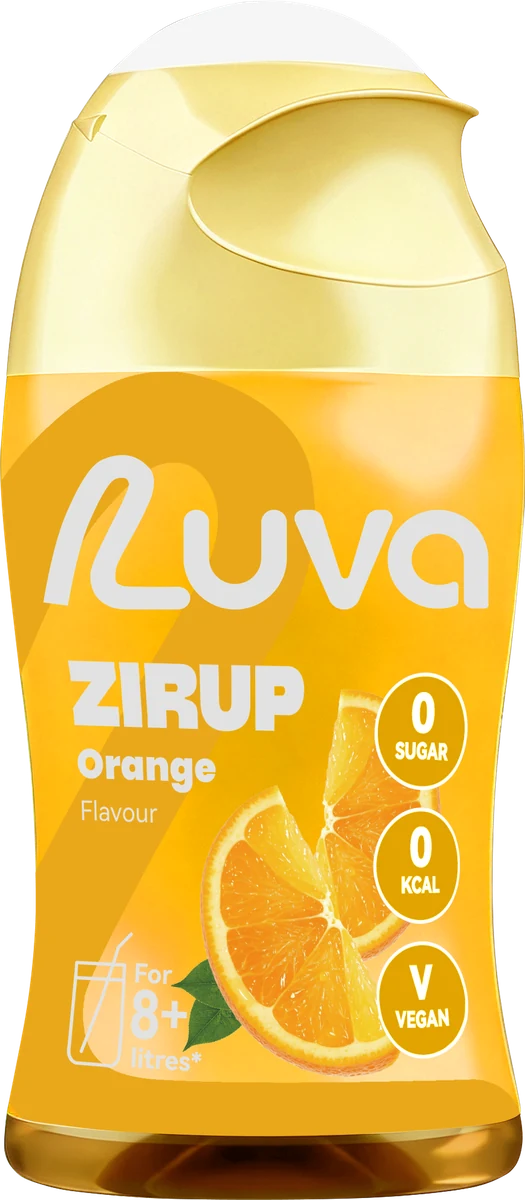
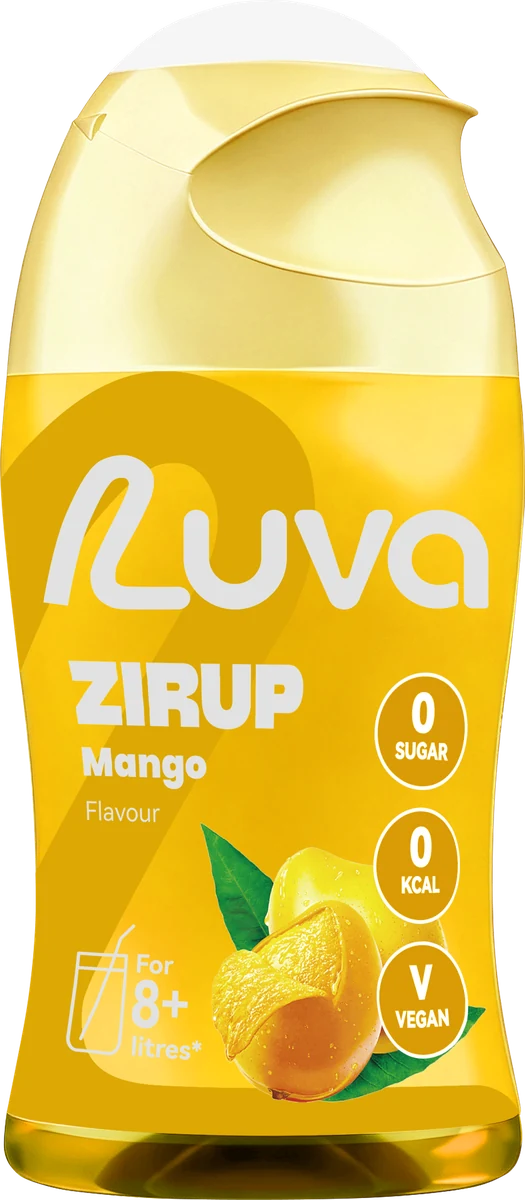
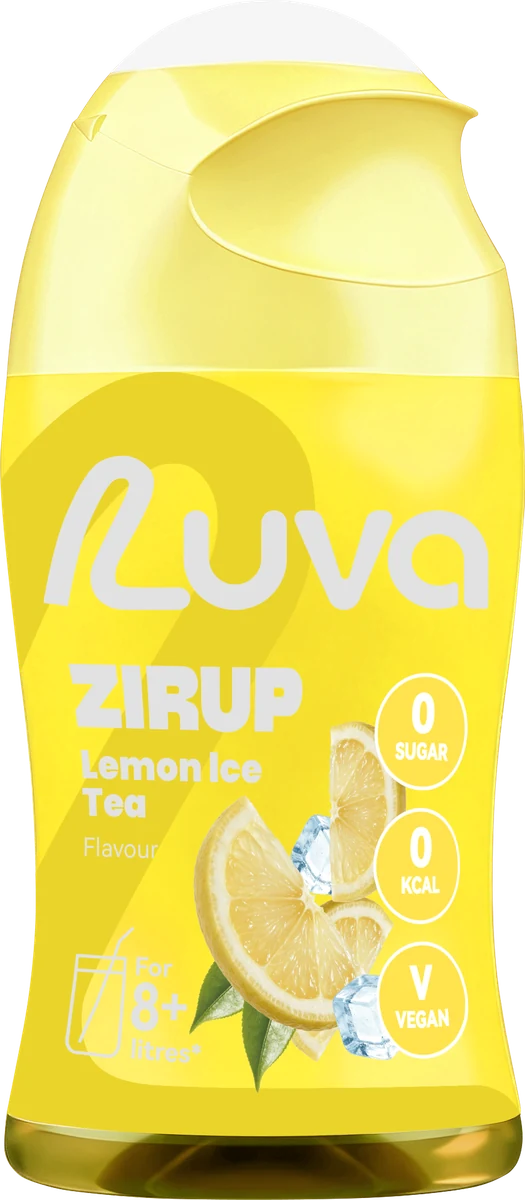
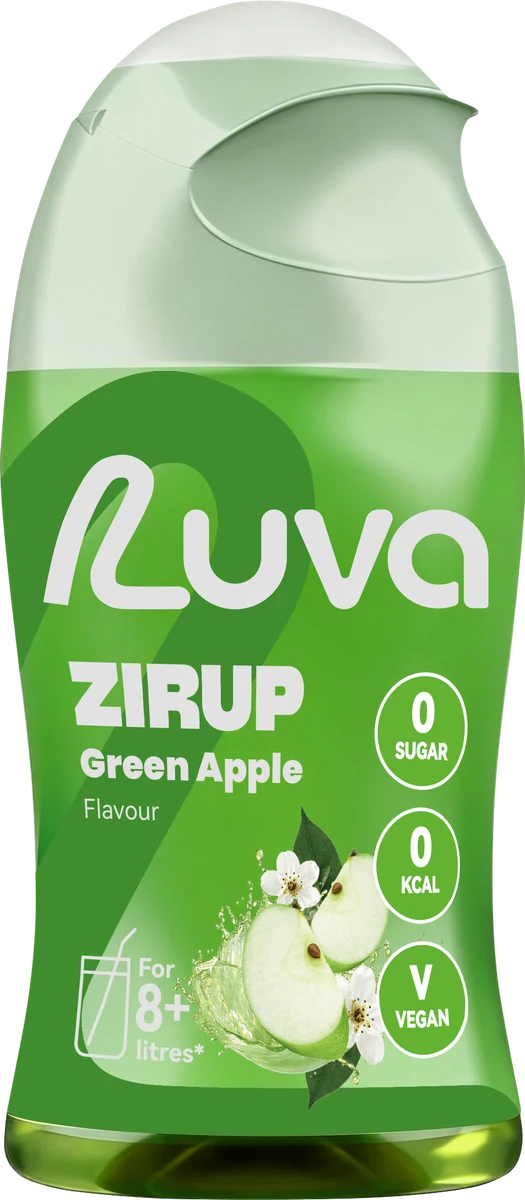
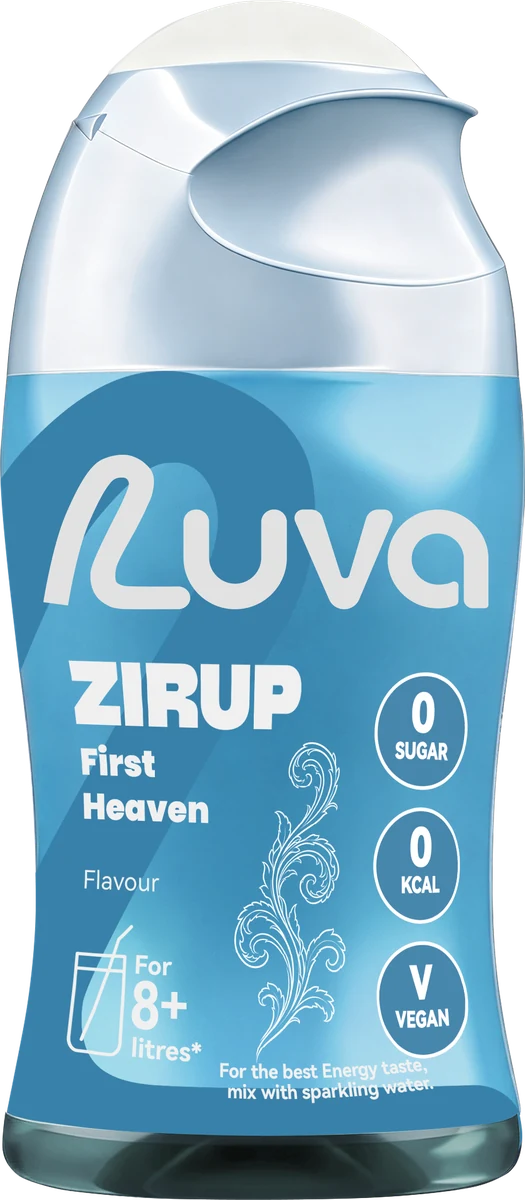
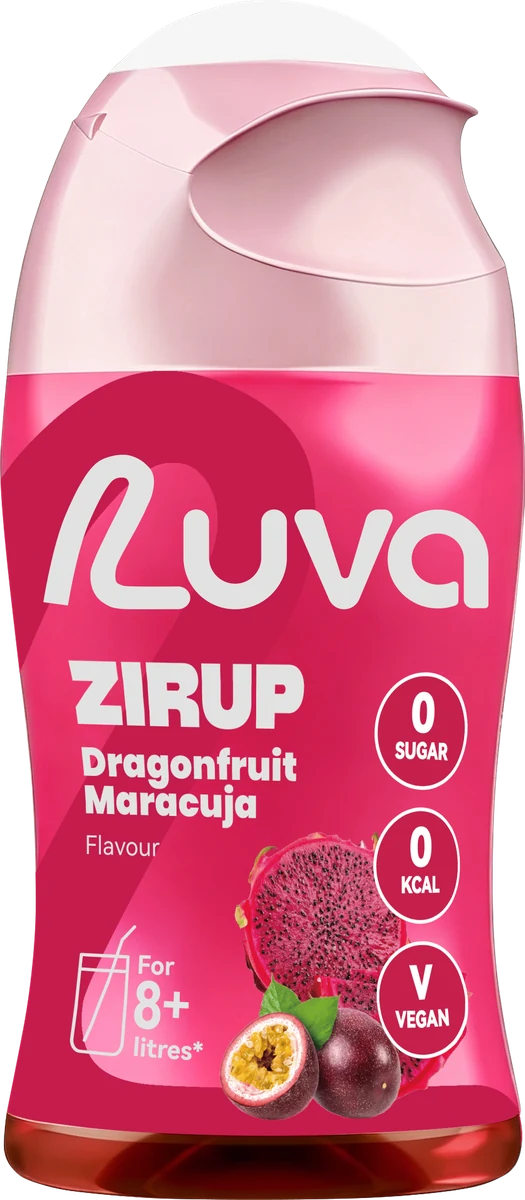
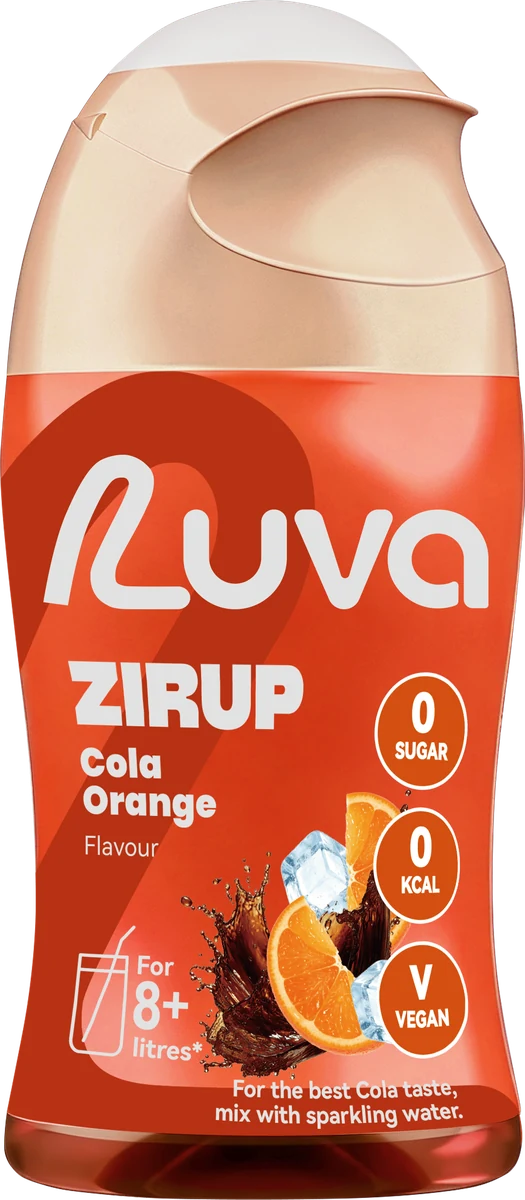
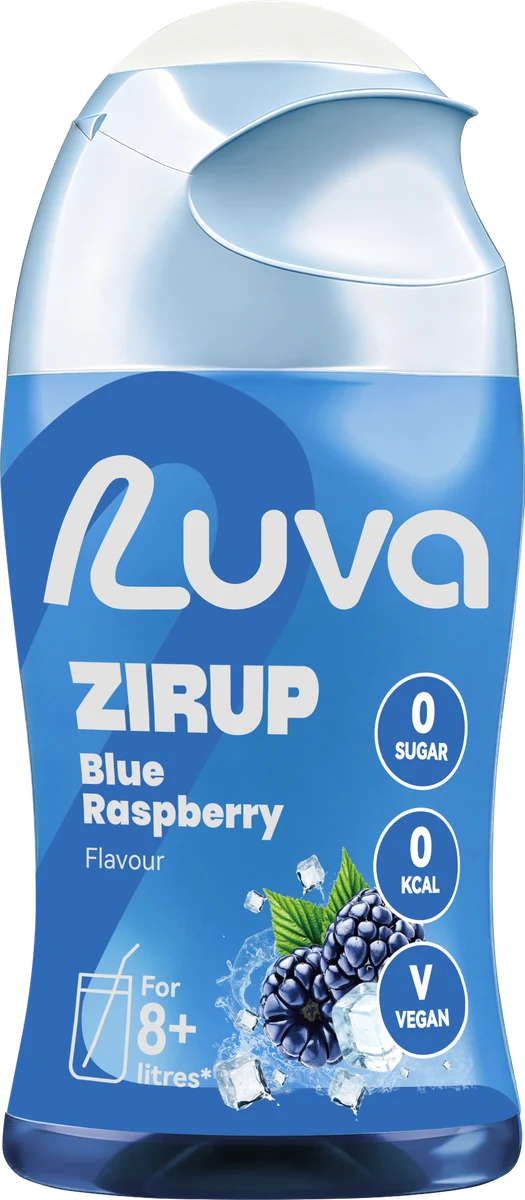
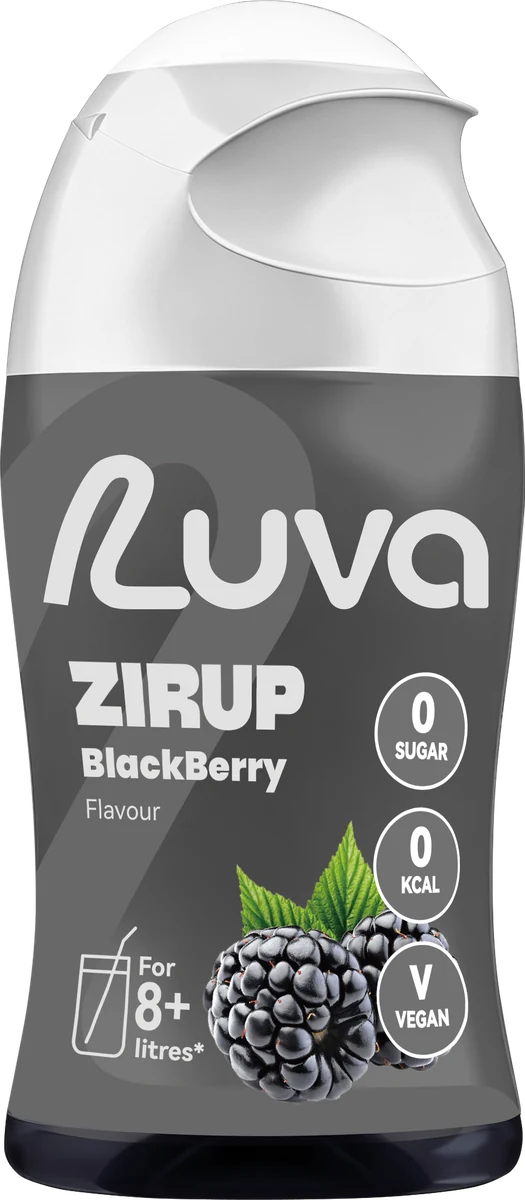




Quick answer: All of these turn water into a flavoured drink; they differ in sugar, concentration and cost per litre. A concentrated sugar-free drink syrup such as ZERUP makes 8+ litres from a 65 ml bottle with 0 g sugar and almost no calories per glass, around AED 2.40 per litre. Regular squash and soft drinks usually contain sugar; "no added sugar" squash and liquid water enhancers use sweeteners; powder sachets are cheap per litre but create a sachet of waste per serving.
Brits grew up with squash, Australians with cordial, Germans with Sirup, Americans with water enhancers, and almost everyone with soft drinks. In the UAE, all of these sit side by side on shelves and on Amazon.ae. If you want flavour without sugar, which format makes the most sense? Here's a fair comparison.
The formats explained
Sugar-free drink syrup
A highly concentrated liquid that you dilute with water: a few millilitres per glass. ZERUP uses about 4 ml per 500 ml and makes 8+ litres per 65 ml bottle. ZERUP uses glycerin as carrier and is sweetened with acesulfame K and sucralose, so a prepared glass contains 0 g sugar and almost no calories (approx. 2-3 kcal per 100 ml prepared drink).
Squash and cordial
A less concentrated syrup, typically diluted around 1 part to 4-10 parts water. Regular squash and cordial contain sugar; "no added sugar" versions use sweeteners. Bottles are usually 750 ml to 1 litre, so they're heavier to carry and store.
Liquid water enhancers and flavour drops
Small squeeze bottles, popularised in the US by brands such as MiO, that add a few drops to a bottle of water. Usually sugar-free. Labels tend to list servings rather than litres, so it's worth checking how many glasses a bottle really makes.
Powder sachets
Single-serve or jug-size sachets of flavoured powder, popular across the GCC. Often sugar-free and inexpensive per litre, but one sachet means one piece of packaging waste.
Soft drinks
Ready-to-drink cans and bottles. Regular versions contain a lot of sugar (a 330 ml can of regular cola has about 35 g); diet and zero versions use sweeteners. Convenient, but you pay for water, packaging and transport with every can.
Fruit-infused water
Water with fresh fruit, herbs or cucumber. Naturally low in sugar and lovely at home, but the flavour is subtle and it doesn't travel well.
Side-by-side comparison
| Sugar-free drink syrup (ZERUP) | Squash / cordial | Liquid water enhancer | Powder sachets | Soft drinks | Fruit-infused water | |
|---|---|---|---|---|---|---|
| Sugar per glass | 0 g | Regular: yes; no-added-sugar: low | Usually 0 g | Often 0 g | Regular: high; zero: 0 g | Very low |
| Concentration | Very high (4 ml per 500 ml) | Low to medium | High | n/a | Ready to drink | n/a |
| Yield per pack | 8+ L per 65 ml | Several litres per bottle | Varies; check servings | 1 serving or jug per sachet | 1 can = 0.33 L | 1 jug |
| Cost per litre | about AED 2.40 | Varies | Varies; often higher per litre | Low | Can price ÷ 0.33 | Cost of fruit |
| Packaging | One small bottle | Large bottle | Small bottle | One sachet per serving | One can or bottle per drink | None |
| Adjustable strength | Yes | Yes | Yes | Limited | No | Limited |
| Works with sparkling water | Yes | Yes | Yes | Some | n/a | Yes |
| Portability | Fits a bag or desk drawer | Bulky | Very portable | Very portable | Heavy in bulk | Not really |
Prices and pack sizes vary by brand and retailer. For any product, divide the price by the number of litres it makes to compare like with like.

How to calculate cost per litre
- Find the price of the pack.
- Find how many litres of finished drink it makes (on the label or calculate from the dilution ratio).
- Divide price by litres.
ZERUP: AED 19 ÷ 8 litres ≈ AED 2.40 per litre. With the 3-pack (any 3 flavours for AED 49), you get 24+ litres in three flavours for about AED 2.04 per litre.
A can of soft drink: divide the shelf price by 0.33 to get the price per litre.

Sugar and sweeteners: what to check
- Regular squash and soft drinks are the main sugar sources here. Since 2026, UAE excise tax on sweetened drinks is tiered by sugar content, a good indicator of how much is inside. See our UAE sugar tax guide.
- Sugar-free products (syrups, enhancers, zero drinks) use approved sweeteners such as sucralose, acesulfame K or steviol glycosides. Regulators consider them safe within their acceptable daily intake. Read are sweeteners safe?.
- Teeth: most flavoured drinks, sugar-free or not, contain fruit acids. Drink them with meals rather than sipping all day.
Which one should you choose?
| If you... | Consider |
|---|---|
| Fill a big bottle at the office every day | A concentrated sugar-free syrup |
| Want the soft-drink feeling without sugar | Syrup with sparkling water, or a zero soft drink |
| Only want an occasional glass at home | Fruit-infused water or squash |
| Are watching cost per litre above all | Powder sachets or concentrated syrup |
| Want less packaging | Concentrated syrup or fruit-infused water |
| Want to rotate many flavours | A syrup range you can mix and match |
Why we chose the concentrated syrup format
We designed ZERUP around how people in the UAE actually drink: a lot, all day, often from a reusable bottle, mostly ice-cold. A very concentrated syrup means a bottle small enough for a handbag, a low cost per litre, no sugar, and the freedom to make each glass as strong or as light as you like. It is also halal certified and vegan, and delivered within 12 hours across the UAE.
The bottom line
There's no single "best" format, only the one that fits your routine. If you want 0 g sugar, a low cost per litre and very little packaging, a concentrated sugar-free drink syrup is hard to beat. Whatever you choose, keep plain water as your base.
Frequently asked questions
What is the difference between a water enhancer and a drink syrup?
Both are sugar-free concentrates you add to water. Water enhancers are usually sold by servings in small squeeze bottles; drink syrups like ZERUP are measured in millilitres per glass and state how many litres a bottle makes, which makes cost per litre easier to compare.
Is ZERUP the same as squash?
It works on the same principle, but ZERUP is much more concentrated (about 4 ml per 500 ml) and contains 0 g sugar per glass. Regular squash contains sugar and is diluted at a much lower ratio.
Is there a sugar-free squash in the UAE?
"No added sugar" squash is available, and concentrated sugar-free drink syrups such as ZERUP offer a similar idea with 0 g sugar per glass and delivery across the UAE.
Which is cheapest per litre?
Powder sachets and concentrated syrups are usually the cheapest per litre; ready-to-drink cans are the most expensive. ZERUP costs about AED 2.40 per litre.
Are water enhancers bad for you?
Most sugar-free water enhancers and syrups use approved sweeteners, which regulators consider safe within their acceptable daily intake. Check the ingredients and keep plain water in your routine.
Compare for yourself: shop ZERUP from AED 19
0 g sugar per glass · 8+ litres per bottle · Halal & vegan · Delivered within 12 hours across the UAE, free over AED 200
Keep reading
- Zero syrup buyer’s guide for the UAE
- Flavoured water without sugar
- More Zerup vs ZERUP by LUVA
- Drinks too sweet?
- ZERUP flavour guide
- Sugar in drinks
- Sweeteners explained
- ZERUP sugar-free drink syrup
Sources
- Coca-Cola UAE. Coca-Cola nutrition facts. www.coca-cola.com
- UAE Cabinet Decision No. 197 of 2025 (Federal Tax Authority). tax.gov.ae
- EFSA (2026). Re-evaluation of sucralose (E 955). www.efsa.europa.eu
- EFSA (2025). Re-evaluation of acesulfame K (E 950). www.efsa.europa.eu
- American Dental Association, MouthHealthy. Dietary acids and your teeth. www.mouthhealthy.org
This article is general information and does not replace advice from a doctor, dietitian or other qualified professional. Last reviewed: October 2026.